A water emergency in a dry Southwest climate behaves differently than one along a humid coastline, which is why Aqua Guard Water Damage routes every call to a crew that actually works in your region instead of a generalized national script.
Call +1-844-578-1604
No call-center-to-subcontractor handoff
Flat-rate quote before any equipment runs
Same equipment standard in every region

We built national coverage market by market, which took longer than buying a subcontractor directory but means the crew on your doorstep actually knows the region.
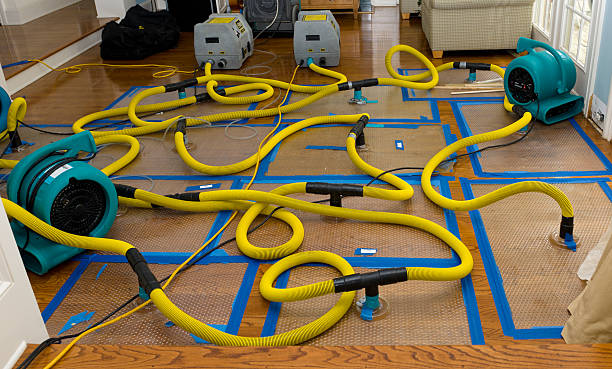
Every truck in our national network carries moisture meters, thermal cameras, and dehumidification equipment suited to both residential and commercial losses.
Homeowners dealing with a flood are stressed enough without technical jargon, so we train our crews to explain the process in plain terms from the first phone call.
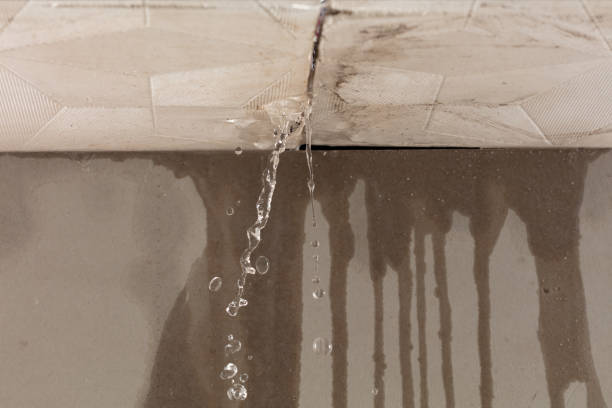
Water damage rarely starts as a dramatic flood — it usually starts small, and these are the signs worth acting on before the damage spreads further.
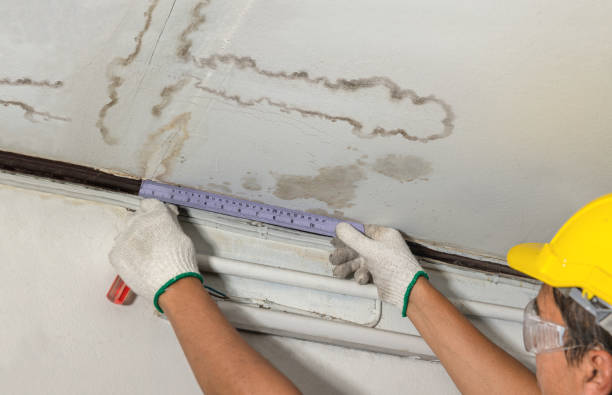
Fresh paint over an old stain can hide the problem visually for a month or two, right up until the drywall paper backing gives out.
A musty note that wasn't there a season ago usually means microbial growth has started somewhere behind a wall or under flooring, well before you can see anything.
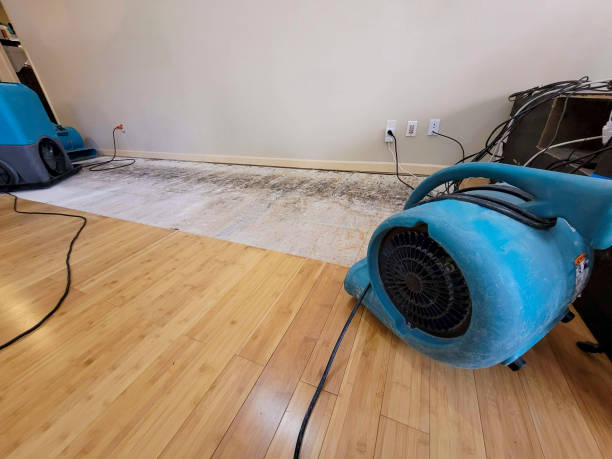
Flooring that shifts slightly when you walk on it, even subtly, is worth a moisture reading before it gets worse.
A sudden increase in usage with no change in household habits is often the earliest sign of a slab leak, well before any visible water shows up.
Bubbling near a window frame frequently traces back to a failed seal letting water in gradually.
A small patch of mold in a corner or along a baseboard means conditions behind that surface have supported growth for a while — the source needs to be found, not just wiped away.
Catching two or more of these signs at once usually means it's past time for a proper inspection.
Bouncing between an extraction company, a drying company, and a repair contractor is how small jobs turn into weeks-long headaches — we keep all three under one roof on purpose.
The equipment on our trucks scales up or down to the job, but the process — assess, extract, dry, verify, repair — doesn't change.
We treat extraction speed as the single biggest variable we control — every additional hour of standing water raises the odds of secondary damage.
Air movers and dehumidifiers get placed according to psychrometric readings taken at assessment, not a default layout used on every job regardless of conditions.
Our sewage cleanup protocol follows IICRC S500 guidelines start to finish, including isolation of the affected zone and disposal documentation.
If mold has already started, containment with negative air pressure goes up before any demolition begins, so spores don't travel to unaffected rooms.
One contract from extraction through reconstruction means you're not managing two separate companies and two separate invoices.
We inventory and relocate contents that need to leave the affected area, then coordinate their return once the space is verified dry.


Four steps, no guesswork — here's exactly what happens between your call and a verified-dry structure.
Dispatch gathers just enough detail to load the right equipment before the truck leaves the lot.
Skipping or rushing this step is how hidden moisture pockets turn into a mold problem months down the line.
Standing water comes out first with commercial extraction equipment, then air movers and dehumidifiers go to work based on the readings just taken.
Final verification is where corners often get cut industry-wide; we treat it as mandatory.
None of these four things matter in isolation — it's the combination of licensing, speed, honest pricing, and a real guarantee that actually changes the outcome of a water emergency.
Every technician carries IICRC certification, and every crew works fully insured — documentation available whenever you want it.
A nearby crew isn't a slogan — it's the gap between drying equipment running in an hour versus half a day.
The number we quote is the number you pay, regardless of how long the drying cycle runs.
If a drying target isn't hit on schedule, equipment stays on-site at no extra charge until the readings confirm it's dry.
We'd rather run a dehumidifier an extra day on our dime than sign off on a reading we're not confident in.
This isn't marketing copy — it's the actual checklist our crews sign off against before a job is marked complete.
Call +1-844-578-1604Coverage spans the country through regional partner crews, each local to the market it serves rather than dispatched from one central hub.
New markets get the same standard from day one: licensed technicians, stocked trucks, and locally set pricing.

"What stood out was how calm the technician stayed while explaining a genuinely stressful situation — that mattered more than I expected."
Renee A., our service area"They found mold starting behind our baseboards before it spread and handled containment properly instead of painting over it like a previous company tried."
Owen D., our service area"They didn't cut corners on the sanitization step even though it clearly slowed them down — with two kids in the house, that mattered to us."
Fatima J., our service area"Fast response and clear pricing, and they handled the back-and-forth with my insurance adjuster directly, which saved me a genuinely stressful week."
Lucas P., our service area"We had a slow leak for weeks without noticing, and thermal imaging found moisture in a spot we never would have checked ourselves."
Grace T., our service area"Our office flooded overnight and industrial equipment was already running before our staff arrived for the morning shift."
Nathaniel W., our service area"A cracked supply line under our kitchen sink went unnoticed for days, and by the time we called, the subfloor was saturated. They only replaced what actually tested wet, not the whole floor."
Bianca H., our service area"They explained the crawl space drainage issue in plain terms instead of technical jargon, and fixed it on the spot rather than scheduling a separate trip."
Derek S., our service area"They found the actual source of the leak instead of just drying the surface damage, which saved us from the same problem happening again in a month."
Melissa C., our service area"Being out of town when it happened was stressful enough — having a crew that could work directly with our property manager made it manageable."
Victor N., our service area